Norconsult AS: “RailCOMPLETE saves time”

RailCOMPLETE provides a high degree of automation and streamlining of processes. In many areas, the program helps to save time, says experienced senior engineer Knut Atle Stene Andersen at Norconsult.  

– With RailCOMPLETE as the central repository for the data, and with the programming of the tables in RailCOMPLETE, the quality has improved compared to the more manual work processes we used to do. But most importantly, the time it takes to produce drawings has gone down significantly, says senior engineer Stene Andersen.  

Tight deadlines and strict rules

Knut Atle Stene Andersen has been working with overhead contact lines and railway since 1993. In 2010 he started with the project management of such installations and has since then participated in several large projects in connection with the electrification and upgrading of the Norwegian railway. These days he is central in the work on the drawings for the electrification of the Trønder and Meråker railway, assignment “ETM”.  

This assignment is carried out as a subcontractor to NRC, which has a turnkey contract for Bane NOR. The section of railway line from Trondheim with the Tyholt tunnel and further east is approximately 120 km with single track and a dozen stations. The contract extends from Marienborg via Stavne-Leangbanen and from Trondheim station to Stjørdal station on the Nordlandsbanen, and from Hell station to Riksgrensen on the Meråkerbanen. There are no contact lines from before, and the railway line is characterized by many and sharp curves.  

– The project must be completed by November 2023. These are tight deadlines and strict regulations. RailCOMPLETE contributes to good implementation, says Stene Andersen.  
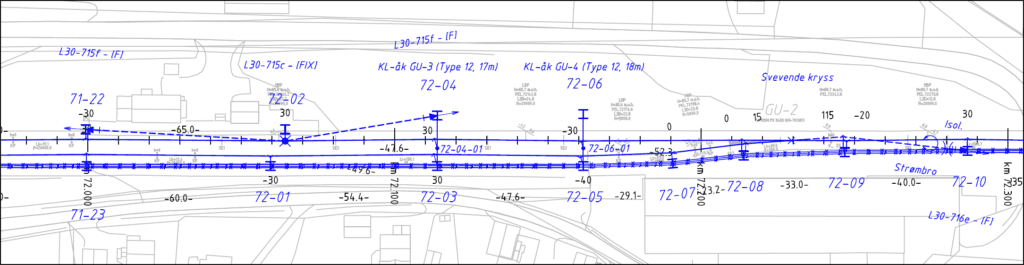
Figure 1: Overhead Catenary System plan view, made with RailCOMPLETE

Saves a lot of time and reduces the possibility of errors

Stene Andersen and his colleagues at Norconsult are working on this extensive project. He checks wiring, equipment placement and dimensioning in accordance with Bane NOR’s extensive technical regulations, and that drawings and tables have the correct appearance and content. There are several hundred drawings in the project, both line drawings in scale 1:500 and 1:1000 for contact line installations, and there are earthing plans in scale. All drawings contain tables with hundreds of figures which of course must be correct.  

During the project, and once it is built, thousands of engineered objects must be reported to Bane NOR’s system for monitoring construction projects, and finally key data must be transferred to Bane NOR’s operational database, “Banedata”.  

In this assignment, foundation plans are not stored as drawings, instead, the XYZ object placement coordinates from RailCOMPLETE are transferred to NRC as data files. There are also no 3D models in this mission.  

-There are many processes and many possible sources of error in such a project. RailCOMPLETE contributes to an increased degree of automation and efficiency of the processes. But although it saves us time and reduces the risk of errors, it still requires considerable expertise to drive such a project forward, says Stene Andersen.  

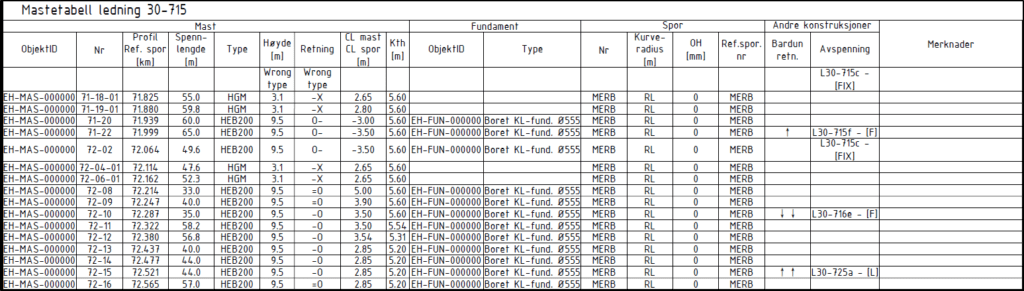
Figure 2: OCS pole table and OCS contact wire table, automatically generated with RailCOMPLETE

Breakthrough – Interlocking tables with RailCOMPLETE

Today we are making Norwegian Railway History – RailCOMPLETE is now capable of modeling tracks, switches, track vacancy detection sections, signal, via points and fictitious end points, and figures out the complex signaling system’s socalled interlocking tables by itself. These are detailed tables which describe the required state for switches and track sections in order to allow a certain train route or shunting route to be set and the corresponding signals be set to ‘clear’.

This far we have developed support for generating train routes, shunting routes, extended train routes and extended shunting routes. The RailCOMPLETE development team now aims at producing all 20 interlocking table types according to the Norwegian Bane NORs design guidelines “Veileder for forriglingstabeller”.

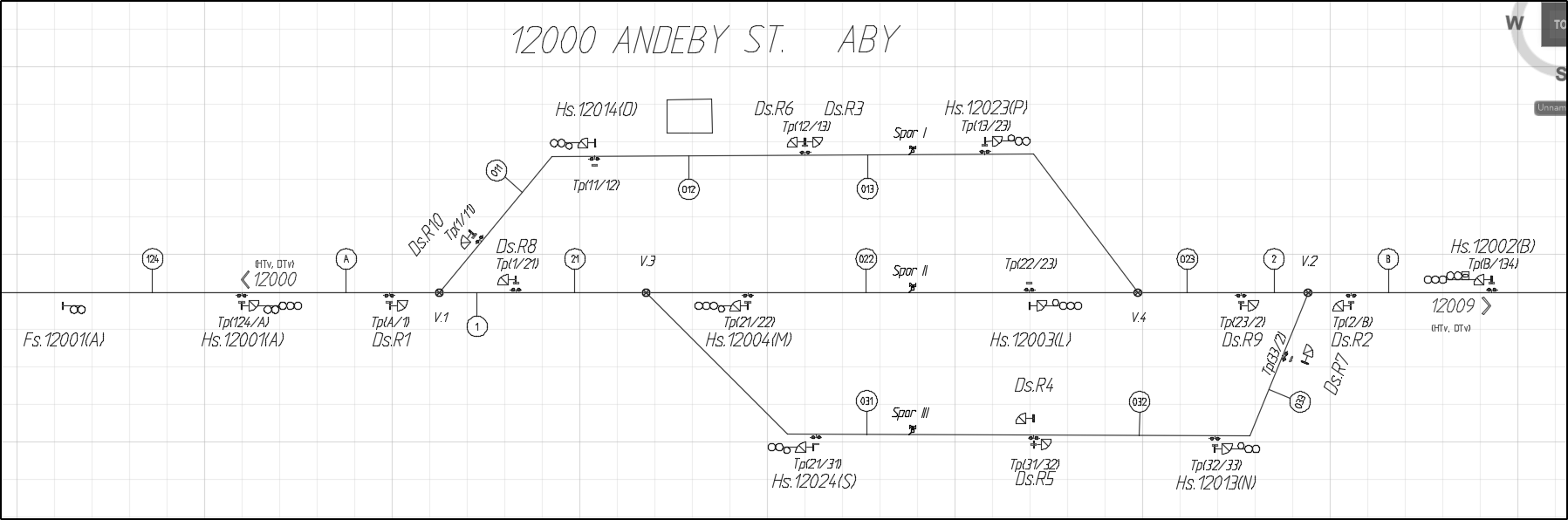
The interlocking tables may be generated from a schematic as well as from a geographic RailCOMPLETE model.

Below you will find a fictitious railway station. The corresponding interlocking tables may be downloaded here.

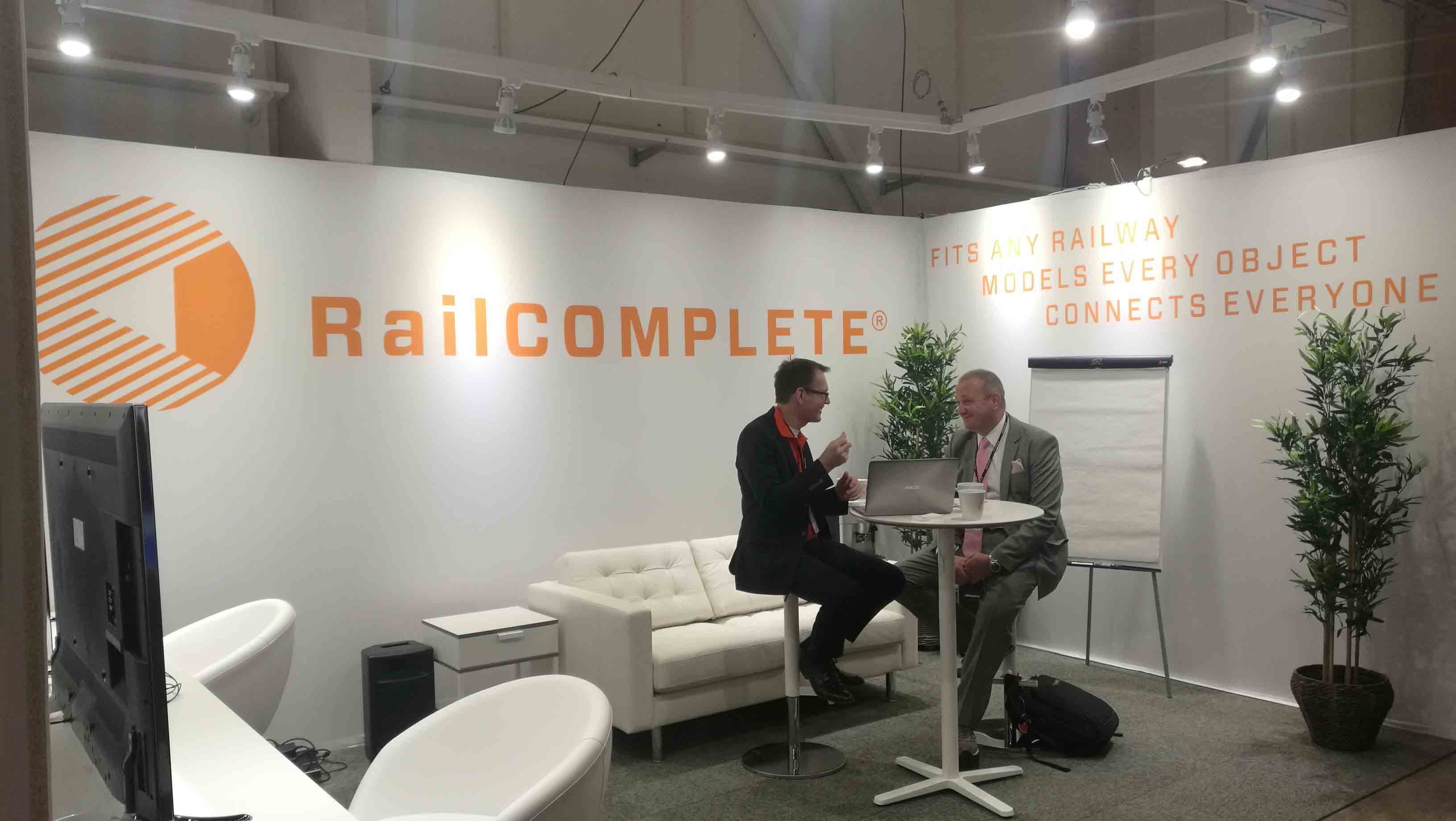
RailCOMPLETE® at Nordic Rail 2017

3D model preview for railway objects

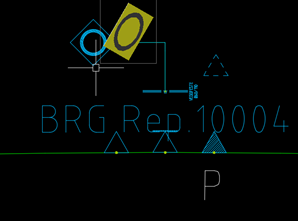
RailCOMPLETE now has a function that previews the associated 3D model for a given object. The example below shows a controlled balise. When the CAD cursor hovers over the 2D symbol in AutoCAD model space, then an image of the associated 3D model is shown from a specified angle (here: from front/left side).

Automated Model Checks in RailCOMPLETE objects

Tired of spending countless hours of checking your railway drawings?

We are proud to announce that RailCOMPLETE objects now compute their own local model checks. Each time an object is used, refreshed or inspected, its model checks are re-evaluated. Model checking automates the tedious process of finding small and large inconsistencies in your model, or between your model and other discipline’s models.

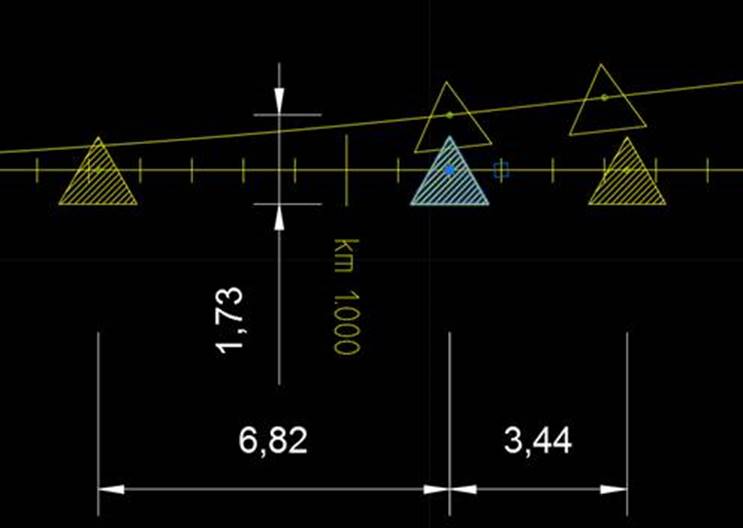
In the example below (*) we have defined Error, Warning and OK distance intervals between neighboring balises in the up and down directions measured along the track. We have also introduced distance checks against balises in flyover tracks or in adjacent tracks. Looking for all objects with a problem is easily done from the Object Manager, in order to review and fix your model before delivery.

(*) ATC for the Bane NOR national rail administration, Norway.

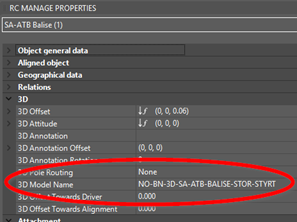
The Manage Properties window shows this…

…when the AutoCAD modelspace shows this:

Invitation to railway BIM product launch, Oslo, 28th of November

Registration

Please fill out these fields to register for this event:

RailCOMPLETE® at Nordic Rail 2017

RC-CopySelectionAlongPath

RC-CopySelectionAlongPath – copying a complete object group

At first the user will configure a group of objects, with property values, formulas, internal connections and relations. Thereafter the command RC-CopySelectionAlongPath is used, where the user is prompted for an increment and a number of copies. The selected group of objects are copied along the path that they belong to, as many and as far as specified. The user may specify that a common reference alignment (track) shall be used, in order for objects to stay aligned even if there are curves, where the different objects will actually be moved by differing lengths.
The obvious benefit for the user is that many tedious engineering hours are saved this way. Relations between objects internal to the group are found in the copies. A typical usage is a group of tunnel catenary masts, foundations and cantilevers which may be copied 50 times in order to make up support for a catenary wire length of 1000-1500 meters. Another usage is the Emergency Exit informative signs in tunnels, which are copied for every 25 meters typically. The boards contain a reference to the preceding and to the following escape rooms, along with formulas which compute the distances to be shown on the boards.

The command will be made available with RailCOMPLETE v1.0.

Norconsult first customer to use RailCOMPLETE®software

Engineer and founder Claus Feyling spotted early a strong need for a more cost-efficient and precise tool for railway infrastructure planning. The RailCOMPLETE® software is now
ready for use.

The very first customer is Norconsult AS, a leading railway consultant company with offices in Sandvika outside Oslo, Norway. Torkil Kind (Norconsult) comments that Norconsult is proud to be the first to use the RailCOMPLETE® software. Norconsult has already tested the software for some time, and it is their opinion that the use of RailCOMPLETE® reduces planning costs and increases planning accuracy. “The whole business idea of Norconsult is to deliver optimal quality to our railway customers’ planning and construction projects, and this is exactly where RailCOMPLETE® helps”, says Kind.

Claus Feyling, CEO of RailComplete AS, says that up till now, railway planning tools in general have been characterised by relatively low levels of automatisation and cost efficiency. The RailCOMPLETE® software automates many of the time-consuming and tedious tasks of preparing railway drawings, which mostly are carried out manually up till today.

The RailCOMPLETE® software, in its current version, turns data entry, editing and checking of huge amounts of railway objects into child’s play. Future versions of RailCOMPLETE® will encode engineering skills, which a fresh engineer would otherwise need a lifetime to acquire, thus enabling him or her to handle complex planning projects with reduced risk of leaving engineering errors in the design.

Today’s RailCOMPLETE® version has built-in export to leading capacity simulation programs and to 3D applications, as well as featuring a powerful table tool. With RailCOMPLETE® you can for instance track loading gauges in 2D for trains running through your model, thus helping you avoid placing of objects in the ruled-out zones during the construction stage. Time-consuming operations such as calculating object mileage referred to one specific track have been automated, as well as the calculation of collision areas in switches, known as the ‘fouling point’.


RailComplete AS

Railcomplete AS is the company that develops and markets the RailCOMPLETE® software. RailCOMPLETE® has been developed to ease the tasks that consultant companies traditionally do when planning a railway infrastructure project. Data are stored only once, with re-use and with ongoing refinement anq quality improvement during all stages of the planning and construction process. The use of RailCOMPLETE® not only reduces public spending on railway planning, increases planning accuracy and reduces the risk of late construction errors, but also increases data quality in the operational databases containing the railway objects after entry into operation.RailComplete AS will target the international market based on technology developed in Norway.The Railcomplete AS offices can be reached in Sandvika, outside Oslo, Norway


Would you like to receive our newsletter?